Oct 22, 2026 | Library
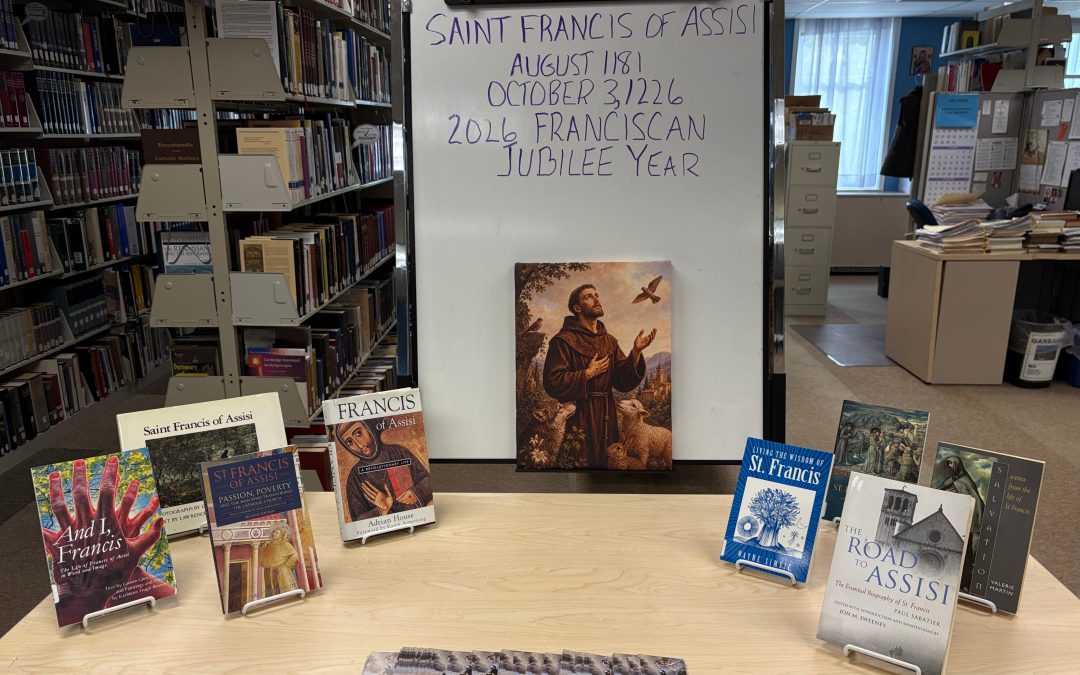
Giovanni di Pietro di Bernardone (c. 19 August 1181 – 3 October 1226), known as Saint Francis of Assisi, a Catholic friar who founded the religious order of the Franciscans.
Born into a wealthy family in Assisi, Italy, he was inspired towards a life of poverty and religious devotion as a young man and began his efforts by repairing chapels and caring for the sick in his hometown. Soon after, he gathered a band of followers and following a journey to Rome to meet Pope Innocent III, he received approval for the foundation of the Order of Friars Minor, which is commonly known as the Franciscan Order. [7]
Under his leadership, the order rapidly increased in size. Notable events in his religious career include his meeting with Clare of Assisi, who founded the Second Order of St. Francis commonly known as the Poor Clares, his journey to Egypt in 1219 in an attempt to convert the sultan Al-Kamil and put an end to the conflict of the Fifth Crusade, and his arrangement of the first live nativity scene as part of the annual Christmas celebration in Greccio. According to Christian tradition, Francis displayed stigmata resembling the wounds on the hands and feet of crucified Christ during the apparition of a seraphic angel in a religious ecstasy in 1224 and died two years later in 1226 at the age of 44.
Francis was canonized by Pope Gregory IX on 16 July 1228. He is commonly portrayed wearing a brown habit with a rope tied around his waist, featuring three knots symbolizing poverty, chastity, and obedience. Francis is associated with patronage of animals and the environment and, along with Catherine of Siena, is patron saint of Italy.

Oct 6, 2026 | Feature, News
Enjoy a delightful evening of carefully selected wines, delicious pairings, wonderful company, and great conversation at Holy Apostles.

Sep 21, 2026 | News
Join Holy Apostles College & Seminary online on October 8 for the 2026 Cardinal Newman Society Virtual College Fair.
Visit our virtual booth to explore our faithfully Catholic, flexible, and affordable degree programs, ask questions about the Take Credit program for high school juniors and seniors, connect with Holy Apostles, and discover how you can pursue your education while growing in faith.
Visit the Holy Apostles booth! We’d love to meet you!
Register: Cardinal Newman Society Virtual College Fair
Sep 1, 2026 | News
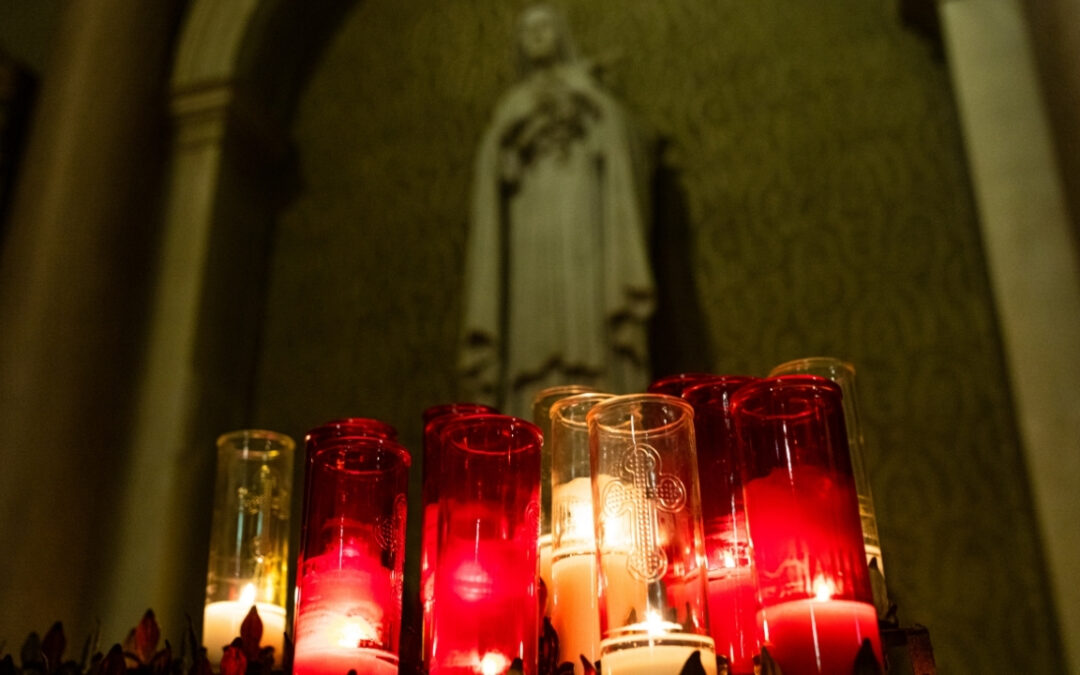
We commemorate our deceased members of the Holy Apostles family and request that you keep them in your prayers. Eternal rest grant unto them, O Lord, and let perpetual light shine upon them. May their souls and the souls of all the faithful departed, through the mercy of God, rest in peace. Amen.
Dennis Quentin McInerny, 89, entered eternal life on December 11, 2025. A faithful Catholic, Navy veteran, scholar, and professor, he devoted his life to the study and teaching of philosophy and theology. He taught at several Catholic institutions and was remembered as a loving example of faith to his family and those who knew him.
Holy Apostles is grateful for the generous legacy gift provided by Dennis from his estate that will help us carry on the important work of faithful Catholic education.
Mr. Jeffery Allen Fox departed this world peacefully on May 7, 2026, after a short battle with cancer. A native of Kankakee, IL, John’s life was a testament to faith, family, and service. He was committed to serving the Church throughout the world in his various assignments as Parish Coordinator and Religious Education Director at military bases, including those in Germany and Italy. In 2025, he received his Master of Arts in Theology (Summa Cum Laude) from Holy Apostles College & Seminary.
Thérèse Catharine “T.C.” McGuirk passed away on July 13, 2026. A gifted classically trained sculptor and painter, T.C. created numerous works of sacred and civic significance, including the life-size bronze statue of Msgr. Joseph V. King displayed near St. Patrick Cathedral in Norwich, Connecticut. Her life was marked by a deep and unwavering Catholic faith, devotion to her family, and a desire that others show greater kindness to one another.
Dr. James J. Lavelle, 81, entered eternal life on July 3, 2026. A devoted educator and lifelong learner, Dr. Lavelle dedicated his life to teaching, encouraging, and inspiring his students. His own love of learning continued throughout his life, culminating in earning his Master of Arts in Theology, cum laude, from Holy Apostles College & Seminary in 2005.
Constance Ann (Allen) Rotondo, 63, entered eternal life on July 8, 2026. A devout Catholic, she generously shared her faith through catechesis, bereavement ministry, prayer, and service to the Church. She was remembered as a woman of deep faith who used her gifts to serve and encourage others. Constance earned her Master of Arts in Theology from Holy Apostles College & Seminary in 2022.
Aug 20, 2026 | Events, News
Join Us for Opening Mass
The beginning of a new academic and formation year is a moment filled with hope, excitement, and gratitude. We would love for you to begin the semester with us in prayer.
Monday, August 24 at 11:00 AM ET
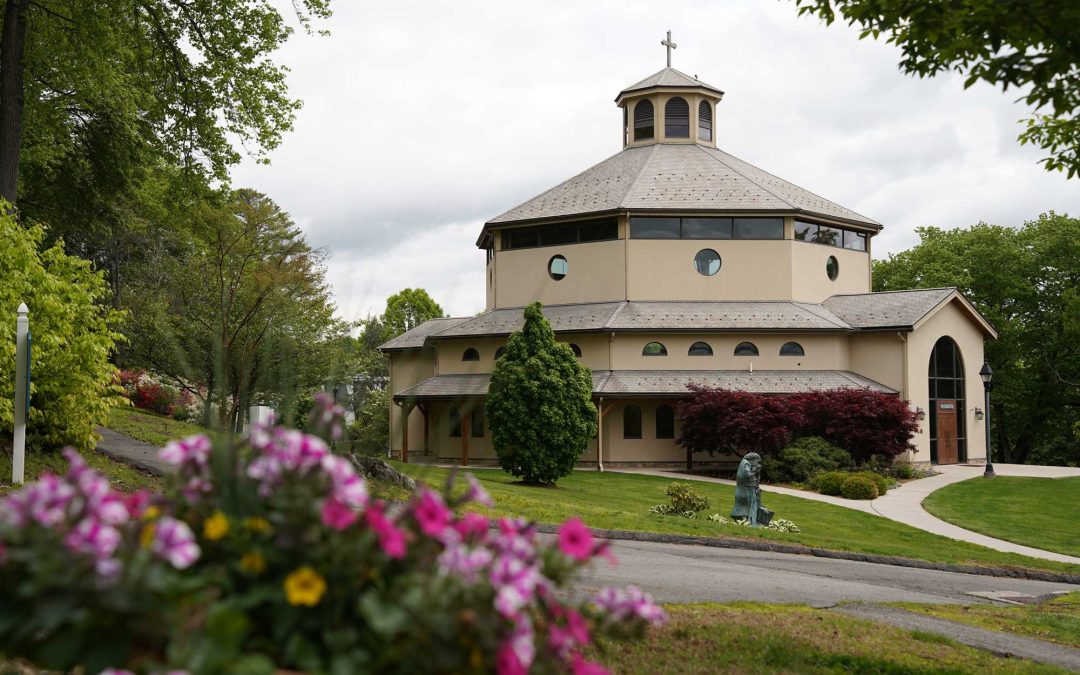
Our Lady, Queen of the Apostles Chapel
Join us on our Cromwell, CT campus or online via holyapostles.edu/live
Whether you are joining us on campus or studying with us from afar, we are grateful to have you as part of the Holy Apostles community.